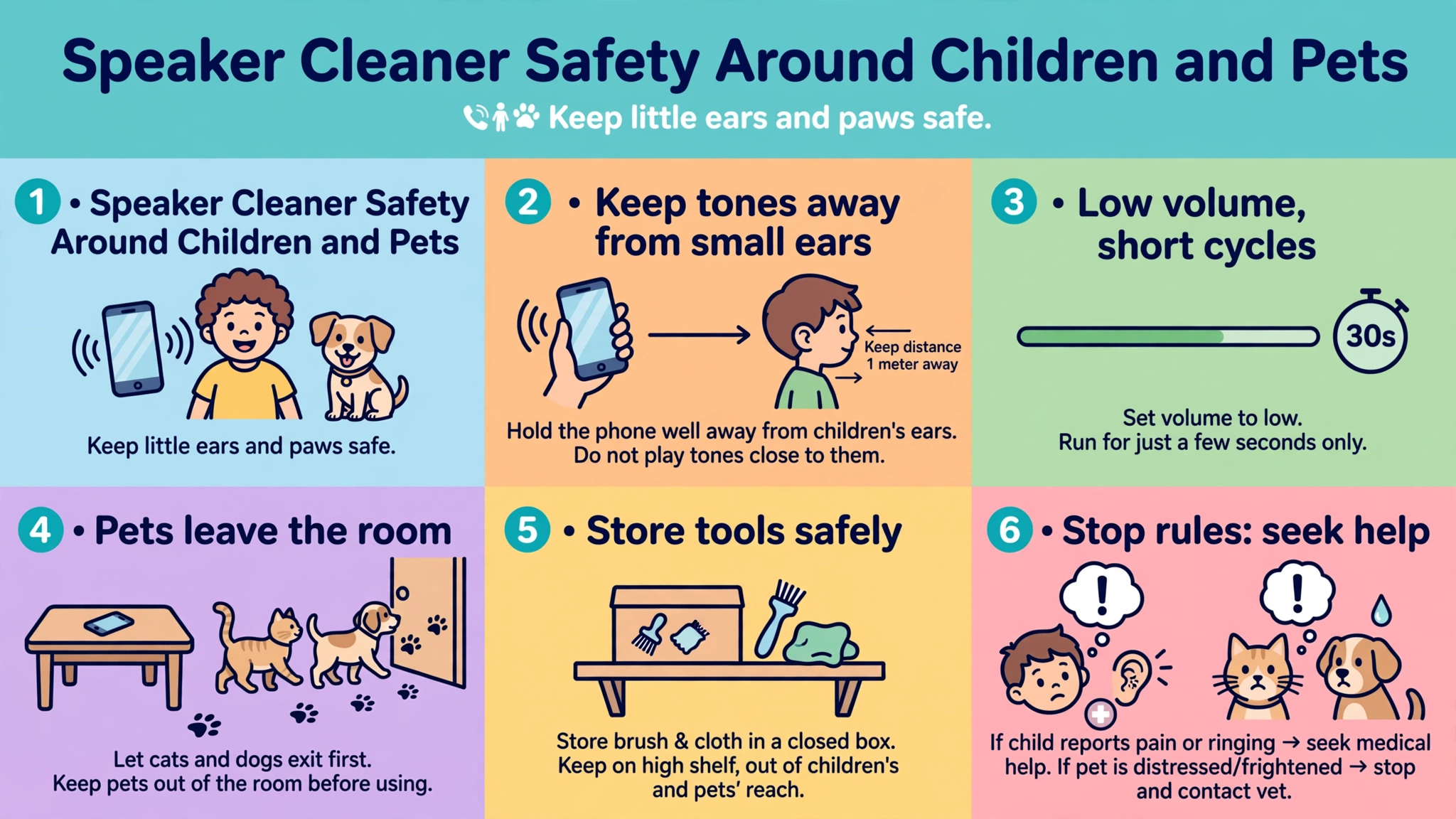
A speaker cleaner can be used in a home with children and pets, but not while they are next to the speaker. Run cleaning tones only in a separate room or after children and pets have left the immediate area, keep the volume moderate, keep cycles short, and keep the device away from every ear — especially a baby's. If a child or pet shows distress, stop the tone immediately and do not repeat it to "test" their reaction.
Why children and pets need a different rule
Adults can judge a tone, move away, or cover their ears. Young children may not understand what the sound is, may not report discomfort clearly, and may move toward an interesting sound rather than away from it. Babies cannot report discomfort at all and cannot move away on their own. A sudden loud or high-pitched tone can startle a child, cause crying or distress, and, at high volume or close range, add to hearing exposure that a child cannot consent to or control.
Pets add a second difference. Dogs, cats, and other animals may hear frequencies and levels differently from people, and a tone that sounds ordinary to an adult may sound sharp, loud, or distressing to an animal. A pet that hides, paces, barks, flattens its ears, or tries to leave the room is communicating discomfort, even if the tone seems quiet to you. That reaction is a stop signal, not a curiosity to investigate with a louder cycle.
The rule that follows from both points is the same: the cleaning moment is an adults-only, separate-room task. It takes only a few minutes, and moving it to another room costs almost nothing.
Before you run a cycle: the room check
First, choose the room. Pick a room where you can close the door, where children and pets are not present, and where you can place the device on a table away from your own ears. If no separate room is available, wait until children and pets are in another part of the home with another adult, rather than running a cycle while they play nearby.
Second, secure the device. Put the phone or speaker on a stable surface where a child cannot grab it mid-cycle and a pet cannot knock it over. Remove the device from a child's reach before you press start, not after the tone begins. If a child is old enough to use the device, explain in simple terms that the cleaning sound is loud and that they should stay in the other room until you say it is finished.
Third, set the volume before you start. Begin at a moderate level, not maximum. A cleaning check does not require maximum volume, and starting moderate protects everyone in earshot, including you, if someone enters the room unexpectedly. Keep the cycle short: one short run, then stop and judge the result in normal use.
Fourth, warn other adults in the home. A short message — "I am running a loud speaker tone in the next room for a minute, please keep the kids and the dog out" — prevents a well-meaning adult from bringing a child or pet in mid-cycle.
During a cycle: what to watch for
Stay with the device for the whole cycle. Do not start a tone and walk away, because a child or pet may enter the room while it is playing. Keep the speaker facing away from the door and away from your own ears, and listen from arm's length or farther.
Stop immediately if a child enters the room, a pet enters or shows distress, or anyone reports discomfort, ringing, or pain. Do not finish the cycle first. Stopping early loses nothing: a partial cycle still tells you whether the speaker changed, and you can repeat a short cycle later in a properly cleared room if needed.
Watch pets for signs that are easy to miss if you are focused on the phone: leaving the room, hiding, pacing, panting, barking or meowing unusually, flattened ears, or a tucked tail. Any of these means stop, let the animal settle in a quiet space, and do not repeat the tone to see whether the reaction happens again. If distress persists, contact a veterinarian for advice rather than testing further.
Babies and toddlers: the strictest rule
For babies and toddlers, apply the strictest version of the rule: no cleaning tones in the same room at all, even at low volume, and never hold a device playing a cleaning tone near a baby's ears. Babies cannot move away, cannot explain discomfort, and have developing hearing that deserves extra caution. Clean the device while the baby is asleep in another room or with another caregiver, and store the device out of reach afterward.
The same caution applies to cleaning products and tools. Keep small brushes, cotton swabs, and detached ear tips out of a toddler's reach, because small parts are a choking hazard separate from any sound risk. Physical cleaning should also be an adult task, done away from small children, with tools put away immediately afterward.
Pets: species and individual differences
Not all pets react the same way, and an individual animal's past experience matters. A dog that has heard household sounds calmly for years may still react to a new sustained tone, while another may ignore it entirely. Do not assume a calm reaction last time guarantees a calm reaction next time, especially if volume, duration, or the animal's stress level has changed.
Keep the animal's escape route open. A pet that can leave the room will usually do so if uncomfortable, which is a safer outcome than a cornered animal that panics. Never hold a pet near a speaker during a cleaning tone, never place a speaker in a pet's bed or enclosure to "clean" it there, and never use a cleaning tone as a training sound or deterrent. The tool is for speakers, not for animal behavior, and using it that way risks distress without benefit.
After a cycle, give a pet time to settle before handling it for grooming or play, and note any lasting change in behavior. Persistent hiding, loss of appetite, or unusual vocalization after a loud exposure deserves veterinary advice, not another exposure to confirm the pattern.
Children using the device themselves
Older children may ask to clean their own phone or tablet, especially if a speaker sounds muffled after water or dust exposure. Treat this as a supervised adult task, not a child task. An adult should inspect the device, do the physical cleaning, and run any tone check in a separate room, then hand the device back for normal use at normal volume.
Use the moment to teach a simple safety habit that will serve the child later: loud sounds are for short checks from a distance, never for listening with the speaker pressed to the ear, and never through earbuds worn during a cleaning tone. Explain that a speaker that only works at maximum volume needs adult help or repair, not louder listening. That habit matters far more than any single cleaning result.
Also check privacy and access before handing a device back. A cleaning session is a good moment to confirm that volume limits are set, that the device is dry before charging, and that no cleaning tool or tone is left running unattended.
If something goes wrong
If a child reports ringing, muffled hearing, pain, or distress after a tone, stop all loud sound, move to a quiet room, and rest. Seek medical advice promptly if symptoms persist, worsen, or follow a very loud or close exposure, and describe the volume, distance, and duration as best you can. Do not test the child's hearing with more tones.
If a pet shows persistent distress after a tone, move it to a quiet, familiar space with water and a place to hide, avoid further loud sounds that day, and contact a veterinarian if behavior does not return to normal. Keep a short note of what happened — device, volume setting, duration, and the animal's reaction — because that note helps a professional judge whether the exposure matters.
If a device was dropped, knocked over, or grabbed mid-cycle, inspect it before further use: check for cracks, a swollen battery, or a charging fault, and do not charge a wet or damaged device. A disrupted cleaning session is not a failed session; it is a session that ended safely, which is the right outcome.
A safe household routine, in one paragraph
Clean physically first with the sound off. Move to a separate room, close the door, place the device on a table away from your ears, and confirm children and pets are elsewhere with another adult if needed. Run one short cycle at moderate volume, stop, and judge the speaker in normal use. Put tools away, return the device only when dry and fully checked, and note any reaction from a child or pet rather than repeating the tone. That routine takes a few extra minutes and removes almost all of the risk that makes parents and pet owners hesitate.
FAQ
Is a speaker cleaner safe around children?
It can be used in a home with children, but not while children are next to the speaker. Run tones in a separate room, keep volume moderate and cycles short, and keep the device away from every ear, especially a baby's.
Can I run a cleaning tone while my baby sleeps in the same room?
No. Use a separate room or wait until the baby is with another caregiver elsewhere. Babies cannot move away or report discomfort, so the strictest rule applies.
Are cleaning tones harmful to dogs and cats?
They can startle or distress animals, which may hear tones differently from people. Keep pets out of the room, keep volume moderate, and stop immediately if a pet hides, paces, barks unusually, or tries to leave.
What should I do if my pet reacts to a cleaning tone?
Stop the tone at once, let the pet settle in a quiet familiar space, and do not repeat the tone to test the reaction. Contact a veterinarian if distress or unusual behavior persists.
Can my child clean their own phone speaker?
Treat cleaning as a supervised adult task. An adult should inspect the device, do the physical cleaning, and run any tone check in a separate room, then return the device for normal use at normal volume.
Should I use maximum volume for a better clean?
No. Start at a moderate level. Maximum volume is not required for a useful check, and it increases risk for everyone in earshot, including you, if someone enters unexpectedly.
What if a child grabs the phone during a cycle?
Stop the tone immediately, take the device calmly, and check the child for distress. Do not restart the cycle until children are in another room, and inspect the device for damage before further use.
Is a speaker cleaner a substitute for repair?
No. Cleaning can help with loose surface debris, but it cannot repair a damaged driver, a torn mesh, or water damage inside the device. Seek repair advice if sound stays distorted, crackles, cuts out, or is absent after gentle cleaning.
Related tools on this site
Related guides on this site
- Safe Headphone Volume
- Ringing Ears After Loud Music: What to Do and When to Worry
- How to Clean Phone Speakers
- How to Clean Headphones: Pads, Mesh and Cable
- Why Do My Earbuds Hurt My Ears? 7 Fixes for Comfort
- Speaker Cleaner Myths: What Is True and What Is Not
- Speaker Cleaner Before Repair: What to Try First Safely
Leave a Reply